

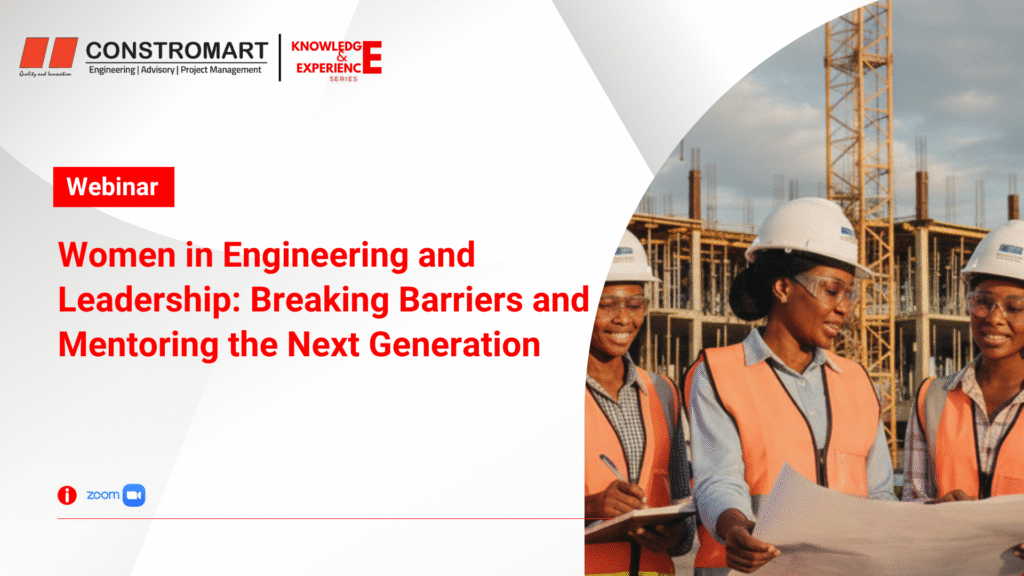
Constromart recently hosted an insightful edition of our Knowledge & Experience Series (Vol. 8, No. 5), featuring a powerful conversation on Women in Engineering and Leadership. The discussion highlighted the achievements of women driving impact in engineering and emphasized the importance of mentorship, representation, and supportive leadership in advancing future talent.
The session featured distinguished panelists Ing. Trudy Morgan, Eng. Latoya Ouna, Michelle Mothibi, and Ing. Deborah Serwaa-Ameyaw, who shared their journeys, leadership experiences, and strategies for empowering the next generation of engineers.
Championing Leadership Through Intentional Growth
To begin the discussion, Ing. Trudy Morgan reflected on entering the engineering profession at a time when female representation was exceptionally low. She emphasized that leadership develops through consistency, intentional effort, and seizing opportunities. In addition to her technical work, she noted that roles such as leading a church choir and working night shifts helped her build confidence, communication skills, and resilience.
She also shared her experience navigating sexism and racism both in the UK and Sierra Leone, highlighting the importance of credibility, knowledge, and competence in overcoming societal barriers. Trudy further reinforced the significance of policy-driven inclusion, championing a target of 30 percent female representation in contracting companies and advocating for stronger STEM foundations in schools to better prepare young women for engineering careers.
Mentorship, Sponsorship and Strategic Networking
Eng. Latoya Ouna shared her inspiring journey of stepping away from secure employment to pursue her master’s degree while transitioning into contract engineering work. This bold move eventually positioned her to lead as Chair of Consulting Engineers’ Future Leaders, expanding her professional influence and visibility.
Latoya explained the difference between mentorship and sponsorship. She noted that mentors offer guidance and encouragement, while sponsors actively recommend, support and open professional doors. She emphasized that both are essential for women seeking to grow and lead in technical and executive roles. Her story highlighted the value of courage, visibility and excellence in securing opportunities and earning a seat at the table.
Technical Excellence and Commitment to Continuous Growth
Speaking on the evolution of hydrogeology and geotechnical engineering, Ing. Deborah Serwaa-Ameyaw discussed emerging technologies such as 2D and 3D water prospecting and seismic investigation techniques. She shared her personal experiences navigating a highly technical field as a woman, stressing the importance of hard work, sacrifice, continuous learning and technical mastery.
Deborah encouraged young engineers to pursue mentorship actively, build competence and remain ready to demonstrate excellence. She also addressed real-world workplace challenges and emphasized the need for integrity. When faced with limited opportunities, she encouraged women not to be discouraged, but rather to consider creating their own paths through entrepreneurship and innovation.
Advocacy, Empowerment and Shifting Perceptions
Michelle Mothibi spoke about the need for women in engineering to equip themselves with the skills and knowledge necessary to influence policy and drive long-term industry transformation. She stressed that technical competence must go hand-in-hand with advocacy and representation at decision-making levels.
Michelle also emphasized the importance of increasing visibility, challenging stereotypes and creating structured pathways for young women to enter, excel and lead within the engineering profession. She highlighted the opportunity to address youth unemployment through mentorship, industry exposure and advanced training initiatives.
Conclusion
The session reinforced that women continue to drive meaningful progress in engineering through skill, vision and leadership. With mentorship, advocacy and commitment to growth, they are expanding opportunities for the next generation and strengthening the industry’s future. Their stories serve as a reminder that excellence, confidence and resilience remain key to shaping Africa’s engineering landscape.


