

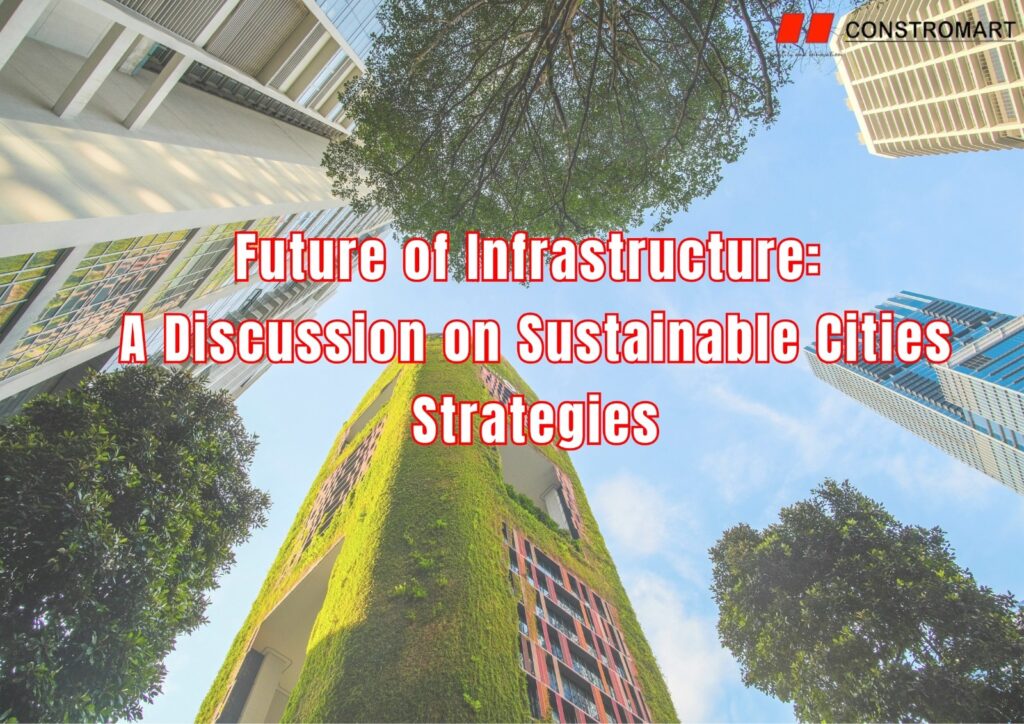
With cities across Africa growing at an unprecedented pace, the conversation around infrastructure is shifting from expansion to resilience. Vol. 7 No. 4 of the Constromart Knowledge and Experience Series featured panelists Knollis Delle, Josephine Agbeko, Evans Nartey, and Timothy Ametefe, who explored what it means to build cities that can withstand the pressures of rapid urbanization while remaining inclusive and sustainable. Led by moderator Antoinette Salmata Gabby Hayes, the discussion drew from real-world experience in housing, energy, transport, and digital infrastructure to examine practical strategies for shaping the urban future.
Setting the tone for the conversation, Knollis Delle identified integrated urban planning and governance, climate-resilient green infrastructure, and innovative financing through local empowerment as three critical priorities. He emphasized the need to move away from fragmented infrastructure planning and build local capacity to manage sustainable projects.
Josephine Agbeko highlighted waste management, transportation, and energy-efficient buildings as key sectors where emissions can be significantly reduced. Drawing on examples from Accra, she advocated for circular waste systems and infrastructure that promotes non-motorized transport. She also addressed the challenges posed by informal housing in urban areas, proposing solutions such as green roofs, improved drainage, and incentives to adopt energy-efficient building practices.
Evans Nartey underscored the pressing demand for new infrastructure, noting that 70% of the buildings required by 2050 are yet to be constructed. He emphasized the need to adopt low-carbon materials, boost construction efficiency, and respond to the declining availability of skilled labor by embracing innovations such as 3D printing and modular construction.
On the topic of climate-resilient housing, Timothy Ametefe noted that traditional infrastructure development has often been reactive, responding to population surges, congestion, or disasters after they occur. He argued that the future demands a proactive, sustainable, and inclusive approach, where urban infrastructure is designed to serve both current and future generations. Timothy emphasized the importance of resource efficiency and ensuring that infrastructure design aligns with both environmental considerations and human needs. He also stressed the importance of adopting life cycle costing models, which account for upgrades, maintenance, and eventual decommissioning, ensuring long-term financial sustainability of infrastructure projects.
The session also explored strategies for inclusive infrastructure design, with Josephine highlighting the importance of community co-design and equity in policymaking. Timothy reinforced this by calling for a shift from reactive development to proactive planning that balances environmental and human needs.
In addressing the future of smart infrastructure, Evans pointed out the need to understand informal economic systems and improve data collection to support the integration of smart technologies. He emphasized the importance of using localized data to inform sustainable urban design.
On the issue of financing, Knollis Delle acknowledged the constraints of relying solely on public funds and highlighted public-private partnerships (PPPs) as viable alternatives. He referenced the Tema Port Expansion Project as a successful PPP model and advocated for the use of local currency bonds to reduce reliance on foreign financing and mitigate exchange rate risks.
In conclusion, panelists reflected on the need to prioritize energy efficiency, sustainable materials, and thoughtful infrastructure design to meet the demands of rapid urbanization. The session reinforced the importance of collaboration, innovation, and inclusive development as Africa charts the path toward more sustainable and livable cities.


