

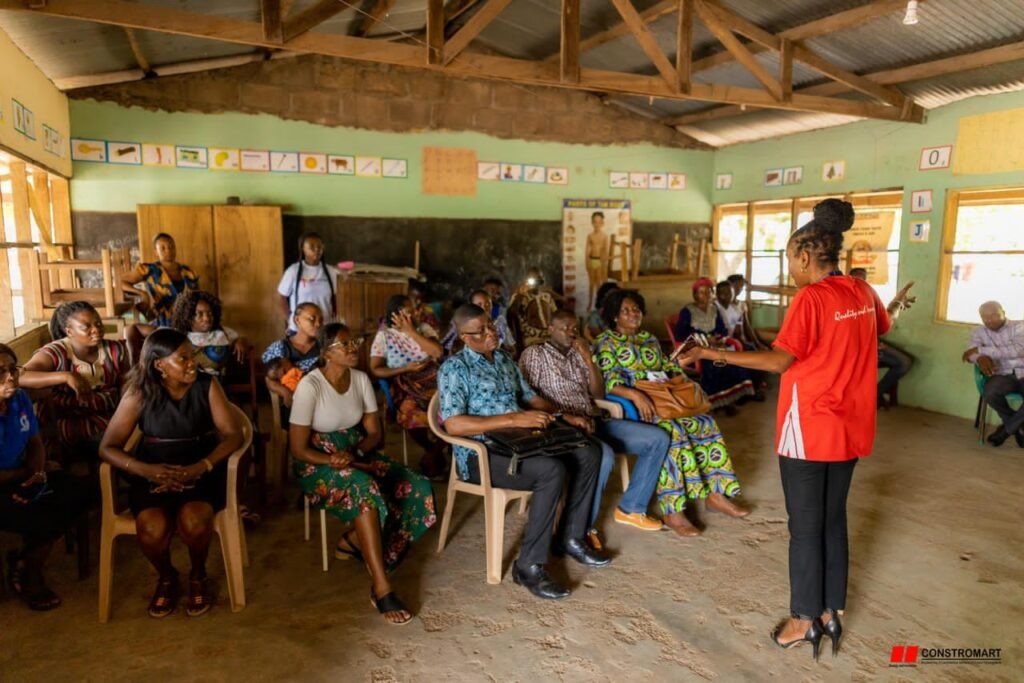
In the latest edition of our Knowledge & Experience series, Majorie Quansah from Fidelity Bank Ghana Limited explored “Community Engagement and Social Sustainability in Infrastructure Projects.” The discussion highlighted the foundational aspects beyond physical structures, emphasizing the critical role of active participation from stakeholders in achieving lasting impact and effectively addressing community needs. This session underscored the integral role of community engagement in ensuring the success and sustainability of infrastructure projects.
Ms. Quansah emphasized the critical importance of community engagement, stressing that involving all relevant stakeholders within the communities is essential for achieving lasting impact and ensuring projects deliver maximum benefit. This inclusive approach facilitates informed decision-making that is tailored to meet the specific needs of each community. Recognizing the varying levels of stakeholder interests and influence underscores the necessity of comprehensive participation throughout the entire project lifecycle.
Furthermore, illustrating Fidelity Bank’s Orange Impact Project as a case study, Ms. Quansah highlighted the Power Interest Grid matrix as a strategic tool for strategizing stakeholder engagement. This matrix categorizes stakeholders based on their levels of influence and interest, emphasizing the pivotal roles played by local officials and community leaders. Engaging stakeholders who wield significant influence and are highly interested ensures crucial support and minimizes delays. Meanwhile, involving less influential but highly interested groups such as community members and NGOs harnesses valuable insights and grassroots support. Also, monitoring stakeholders with low influence and interest levels is essential to mitigate misinformation that could potentially destabilize project initiatives.
Ms. Quansah emphasized participatory planning to involve communities in decision-making processes, ensuring projects align with local needs and conditions. She advocated for inclusive engagement strategies and highlighted the phased introduction of technology, preceded by thorough community research to enhance effectiveness and community acceptance.
Additionally, Quansah underscored the essential role of policies and regulatory frameworks, particularly SDGs, in guiding community development projects. SDG 11 emphasizes creating secure environments with essential amenities for sustainable cities and communities, offering comprehensive guidelines across sectors to advocate for sustainable practices and address societal challenges effectively.
In conclusion, the session underscored that prioritizing stakeholder involvement, transparency, and implementing innovative, inclusive strategies are essential for ensuring the sustainability of infrastructure projects. Such approaches enable organizations to empower communities, achieve significant impacts, and foster sustainable growth in underserved areas by aligning projects with community priorities and ensuring long-term success.


